
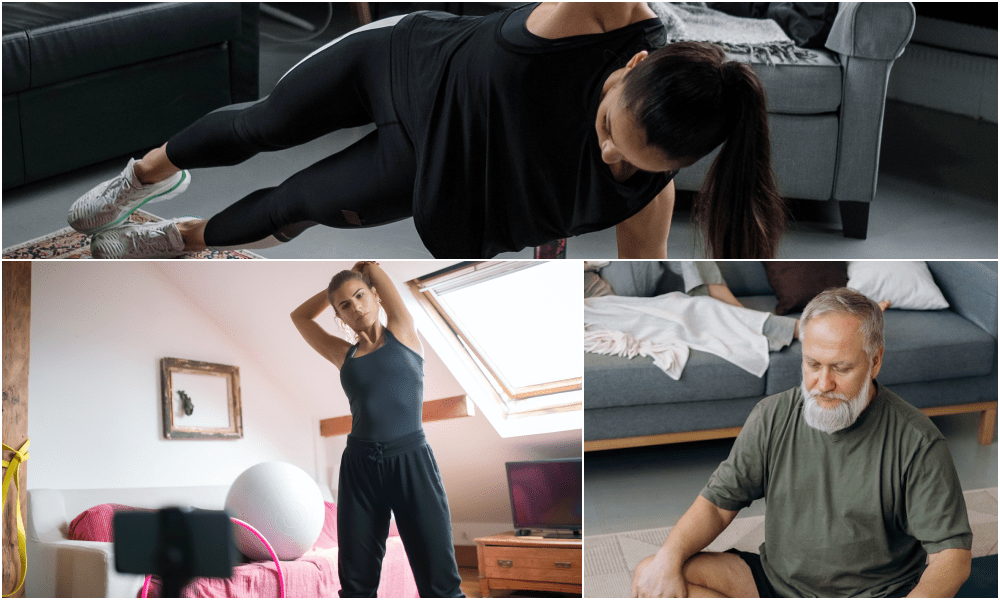
Comprendre le cycle de stagnation physique
Il arrive souvent que les personnes se retrouvent prisonnières d’un cycle répétitif au cours de leur parcours de remise en forme, caractérisé principalement par un sentiment de fatigue et d’insatisfaction face à leurs progrès. Cette stagnation peut résulter d’une combinaison de barrières psychologiques, de plateaux physiques et d’attentes irréalistes, qu’elles soient fixées par soi-même ou influencées par des facteurs externes.
Il est essentiel de reconnaître et de remédier à cette stagnation physique pour garantir le succès à long terme de tout programme d’entraînement.
Une barrière psychologique courante est la présence d’objectifs irréalistes. Lorsque les individus se fixent des ambitions qui dépassent de loin leurs capacités actuelles ou le délai dont ils disposent, ils peuvent se sentir découragés lorsque les progrès ne sont pas immédiats. Cette déception peut conduire à l’épuisement et à une baisse de la motivation à continuer, exacerbant ainsi le sentiment de stagnation. La peur de l’échec peut également nuire à la motivation, poussant les individus à adopter un mode de vie plus sédentaire plutôt que de s’efforcer d’atteindre leurs objectifs de remise en forme.
De plus, les plateaux physiques jouent un rôle important dans le cycle de stagnation. Lorsqu’il est soumis au même type d’entraînement pendant une longue période, le corps humain peut s’habituer à la routine, ce qui entraîne une baisse des résultats. Sans variation de l’intensité, de la durée ou du type d’entraînement, les personnes risquent de ne pas obtenir les résultats escomptés, ce qui engendre de la frustration et conduit souvent à l’arrêt complet de leurs efforts.
Des influences extérieures, telles que la comparaison sociale via les réseaux sociaux, peuvent encore exacerber les sentiments d’insuffisance et de doute de soi. Voir d’autres personnes obtenir des résultats rapides peut fausser les perceptions personnelles, ajoutant une pression supplémentaire qui n’est pas toujours bénéfique. L’effet cumulatif de ces facteurs peut créer un cycle de stagnation omniprésent, se manifestant par de la fatigue et un manque d’enthousiasme envers les efforts de remise en forme.
En fin de compte, identifier ces obstacles est essentiel pour sortir de ce cycle de stagnation. Comprendre l’interaction entre les défis psychologiques et les limites physiques peut permettre aux individus de repenser leur approche et de se lancer dans un parcours de remise en forme plus durable et plus gratifiant.
Identifier vos obstacles personnels
Pour atteindre les résultats souhaités en matière de remise en forme, il ne suffit souvent pas d’un simple effort physique ; cela nécessite une compréhension approfondie des obstacles personnels qui entravent les progrès. Identifier ces obstacles constitue une première étape cruciale pour établir un plan d’action efficace en vue de s’améliorer. L’introspection est un outil efficace dans ce processus, car elle permet à chacun de mieux cerner ses motivations, ses états émotionnels et ses limites physiques.
Commencez par examiner votre état d’esprit actuel. Posez-vous les questions suivantes : quels sont mes objectifs de remise en forme à long terme ? Quels obstacles quotidiens m’empêchent d’atteindre ces objectifs ? Tenez compte à la fois des forces intrinsèques, telles que le doute de soi et le manque de confiance, et des facteurs externes, tels qu’un emploi du temps chargé ou des systèmes de soutien insuffisants. Ces réflexions peuvent révéler des schémas qui ne sont pas forcément évidents au premier abord.
Ensuite, évaluez votre état émotionnel pendant vos séances d’entraînement. Des sentiments de frustration ou d’ennui s’immiscent-ils dans votre routine d’exercice ? Réfléchissez aux moments où vous vous êtes senti particulièrement déconnecté ou démotivé. Comprendre comment vos émotions interagissent avec votre parcours de remise en forme peut vous aider à identifier les tendances susceptibles d’affecter vos progrès.
De plus, il convient de tenir compte des aspects physiques. Existe-t-il des blessures ou des affections chroniques qui constituent des obstacles majeurs ? Il est essentiel d’identifier ces obstacles physiques pour éviter les blessures et améliorer les performances globales. Il peut également être utile de prendre en considération des facteurs tels que l’alimentation et le repos, car ils influencent directement la capacité d’une personne à pratiquer efficacement une activité physique.
En abordant systématiquement ces aspects, les lecteurs peuvent acquérir une vision claire des obstacles personnels qui entravent leur parcours de remise en forme. Cette nouvelle prise de conscience permettra à chacun de rechercher des solutions ciblées, ce qui aboutira finalement à une approche plus structurée pour atteindre ses objectifs et sortir de la stagnation.
Stratégies pour sortir du cercle vicieux du fitness
Pour sortir efficacement d’une impasse dans un programme de remise en forme, les coachs personnels recommandent souvent plusieurs stratégies concrètes adaptées aux besoins de chacun. L’une des premières étapes consiste à adapter les routines d’entraînement. Répéter les mêmes exercices peut entraîner une stagnation ; ainsi, modifier le programme pour y inclure des activités variées, telles que la musculation, le cardio ou des exercices d’assouplissement, peut stimuler une nouvelle croissance musculaire et renforcer l’engagement global.
Intégrer des phases de repos et de récupération est également essentiel pour progresser. Des jours de repos réguliers permettent au corps de se réparer et de se reconstruire, ce qui améliore au final les performances. Un coach personnel peut suggérer des protocoles de récupération spécifiques comprenant des étirements, l’utilisation d’un rouleau en mousse ou même du yoga, permettant ainsi aux clients de se ressourcer tout en prévenant l’épuisement et les blessures.
Se fixer des objectifs réalistes et mesurables joue un rôle crucial pour surmonter les obstacles. Les coachs personnels aident leurs clients à identifier des objectifs réalisables, en décomposant les grandes aspirations en petites étapes gérables. Cette méthode permet non seulement de maintenir un niveau de motivation élevé, mais offre également une voie claire vers la réussite, renforçant ainsi la confiance en soi.
La nutrition est un autre aspect primordial qui influe sur les résultats en matière de remise en forme. Le fait de suivre une alimentation équilibrée, riche en aliments complets tout en surveillant son apport calorique, peut aider les clients à progresser vers leurs objectifs. Les coachs personnels aident souvent leurs clients à élaborer des plans alimentaires sur mesure, renforçant ainsi l’idée qu’une alimentation adéquate et la remise en forme sont des éléments indissociables d’un parcours de santé réussi.
Enfin, on ne saurait trop insister sur l’importance de la responsabilisation. Le fait d’avoir un coach personnel garantit un engagement constant envers les routines de remise en forme, car celui-ci apporte l’encouragement nécessaire et des commentaires constructifs lorsque des difficultés surviennent. Ce soutien professionnel est inestimable pour surmonter les obstacles et retrouver son élan, établissant ainsi une approche durable de la remise en forme et du bien-être.
Témoignages et exemples concrets de réussite
Dans la quête d’une transformation personnelle, les témoignages de réussite concrets constituent une preuve convaincante de l’efficacité du travail avec des coachs personnels. Ces récits sont non seulement source d’inspiration, mais ils mettent également en lumière la diversité des méthodes utilisées et les changements de mentalité significatifs vécus par les personnes qui parviennent à sortir de l’impasse.
Sarah, une professionnelle du marketing âgée de 32 ans, en est un exemple frappant. Sarah a lutté pendant des années contre son surpoids et pour améliorer sa condition physique générale, se retrouvant souvent prise dans un cycle répétitif de régimes ratés et de séances de sport sans motivation. Après avoir décidé de faire appel à un coach personnel, elle a connu un changement radical dans son programme. Son coach lui a proposé un programme d’entraînement sur mesure axé sur la musculation et les mouvements fonctionnels, ainsi qu’un accompagnement nutritionnel spécialement conçu pour sa morphologie et son mode de vie. En six mois, Sarah a déclaré avoir perdu 11 kg, mais surtout, elle s’est sentie plus forte et revigorée. Le soutien qu’elle a reçu a non seulement amélioré ses capacités physiques, mais a également renforcé son état d’esprit.
L’histoire de Mark, un père de trois enfants âgé de 45 ans qui souhaitait retrouver son énergie et sa vitalité, est un autre parcours marquant. Mark se sentait de plus en plus fatigué, ce qui l’empêchait de participer aux activités avec ses enfants. En s’associant à un coach personnel, Mark a pu comprendre que sa fatigue provenait non seulement d’un manque de forme physique, mais aussi de mauvaises habitudes alimentaires. Son coach l’a guidé dans une refonte complète de son mode de vie, combinant des séances d’entraînement et des pratiques alimentaires conscientes. Grâce à cela, Mark a perdu 13,6 kg, s’est musclé et a constaté une amélioration significative de son niveau d’énergie. Ce changement lui a permis de participer plus pleinement au mode de vie actif de sa famille, créant ainsi des souvenirs inoubliables et renforçant ses liens avec ses enfants.
Ces témoignages montrent qu’avec des conseils et un soutien adaptés, chacun peut surmonter la stagnation et obtenir des résultats remarquables. Travailler en étroite collaboration avec des entraîneurs personnels permet non seulement de transformer son corps, mais aussi de retrouver un sens à sa vie et la détermination nécessaire pour maintenir un mode de vie sain.