
5 Signs You Need an In-Home Personal Trainer in Montreal
Walk through Griffintown, the Plateau, Verdun, or the South Shore on a weekday morning and you’ll notice something odd: the gyms aren’t as packed as they used to be. That’s not because people have given up on fitness. It’s because a lot of them have quietly changed where they train.
No more fighting for a squat rack at 6:45 a.m. No more circling the block twice looking for parking near a downtown gym. No more paying for a membership you use twice a month out of guilt. Montrealers are inviting fitness into their homes — literally. In-home personal training, where a certified coach comes to your condo, your triplex, your backyard, or your building’s shared gym, has become one of the fastest-growing corners of the fitness world in this city.
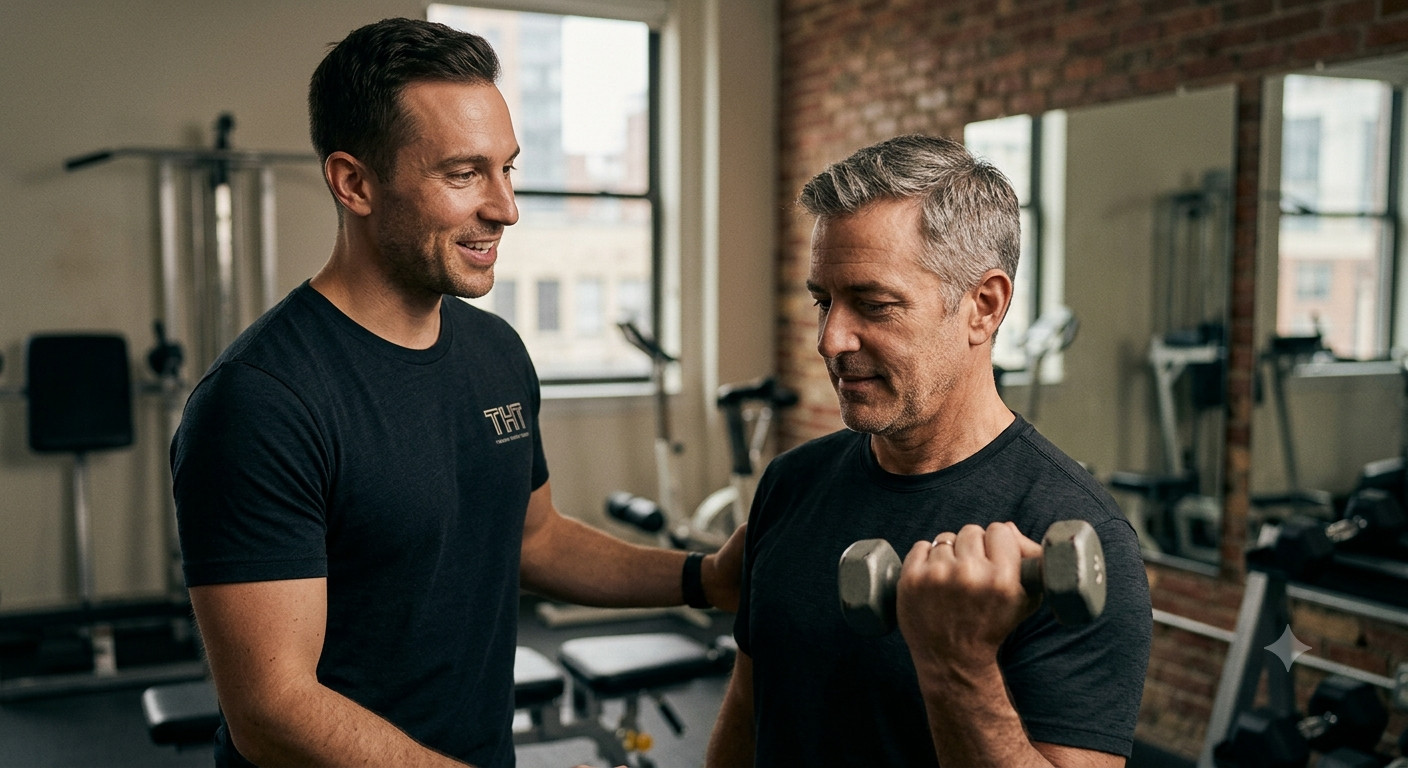
With the rise of in-home personal training, many individuals are opting for tailored workouts in the comfort of their own space.
Montreal is a city of extremes: winters brutal enough to make a four-block walk feel like an expedition; a downtown core where parking can cost more than the workout itself; and a work culture that has gone hybrid. If you are looking for a way to make fitness sustainable, here are the five clearest signs it’s time to let a trainer come to you.
Why In-Home Training is Booming Across Montreal
Before identifying the signs, it helps to understand the environmental factors driving this mobile fitness trend across the Greater Montreal Area.
1. Overcoming Harsh Montreal Winters
Anyone who’s tried to hold onto a 6 a.m. gym habit through a Montreal January knows the struggle. Black ice, frozen car engines, and punishing wind chills are real physical barriers. In-home training takes the weather completely out of the equation. If you can get from your bed to your living room, you can train—even at -25°C.
In-home personal training ensures that you can adapt your workouts to fit your schedule and needs, regardless of the weather outside.
2. Maximizing Your Most Valuable Currency: Time
Between commuting downtown, daycare pickups in Ahuntsic, or traffic in Longueuil, most Montrealers don’t have 90 minutes to spare for a gym trip. In-home training strips away the commute, leaving you with just the workout—45 to 60 minutes of pure efficiency.
Choosing in-home personal training means you can have dedicated time with a professional who understands your goals.
3. Reducing Gym Anxiety and Intimidation
For beginners, older adults, or postpartum mothers, the crowded gym floor can be a major barrier. Training in your own space allows the “audience” to disappear, letting you focus on movement without the fear of being watched.
In-home personal training offers the opportunity to build confidence in your movements without the distraction of others.
4. Leveraging Modern Condo Living
With the condo boom in Griffintown and Ville-Marie, many residents have access to building gyms they rarely use. A mobile trainer allows you to finally get real value out of the amenities you are already paying for through your condo fees.
5 Signs It’s Time to Switch to At-Home Personal Training
Sign #1: Your Schedule and Logistics Keep Cancelling Sessions
If your workouts are frequently interrupted, consider the benefits of in-home personal training for consistent progress.
If you frequently find yourself saying, “I’ll go after work—oh wait, I have to grab my daughter from LaSalle,” or “The Metro was delayed,” you don’t have a motivation problem; you have a logistics problem.
Montreal’s geography—spread across islands and connected by bridges prone to rush-hour backups—makes a “quick trip to the gym” a major logistical project. When your workout depends on traffic, parking, and weather aligning perfectly, the workout is usually the first thing to be cut.
The Fix: Once your trainer arrives at your door, the commute-related decision tree vanishes. The session begins the moment they walk in.
Sign #2: You Feel Anxious or Self-Conscious in Commercial Gyms
Big commercial gyms are often built for a specific type of user: someone already confident with heavy equipment and comfortable being watched by mirrors. If you struggle with body image discomfort, beginner anxiety, or the fear of “doing it wrong,” the gym floor becomes an obstacle to your progress.
The Fix: In-home training removes the audience. You can fumble through a new movement or sweat heavily without a single stranger nearby. Confidence builds in private first.
By opting for in-home personal training, you can overcome fitness challenges in a supportive environment.
Sign #3: You Need Specialized Supervision (Postpartum or Injury Rehab)
Generic programming is risky if you are recovering from an ACL tear, managing chronic back pain, or navigating postpartum recovery (such as diastasis recti). There is often a dangerous gap between being “cleared by a physiotherapist” and feeling safe in a crowded gym.
The Fix: A trainer working with you in your home can watch every single rep, correcting form in real-time and adjusting the plan based on how your body responds that day.
Sign #4: You’ve Experienced the “Fitness App” or “Gym Membership” Cycle
In-home personal training provides a unique approach to fitness that keeps you engaged and accountable.
If your fitness history is a graveyard of unused memberships and abandoned apps, you aren’t lacking willpower; you are lacking accountability. Apps provide notifications; in-home trainers provide a relationship.
The Fix: An in-person professional provides immediate feedback and emotional support that an algorithm cannot replicate. They notice when your energy is low and adjust accordingly.
Sign #5: Your Lifestyle Doesn’t Fit Traditional Gym Hours
Standard 6 p.m. spin classes don’t work for shift workers in healthcare, entrepreneurs with unpredictable hours, or parents with tight afternoon routines. If you are constantly trying to bend your life around a class calendar, you will eventually burn out.
In-home personal training accommodates your lifestyle, making it easier to integrate workouts into your daily routine.
The Fix: In-home training adapts to your rhythm. Whether it is 7 a.m. before the kids wake up or 9 p.m. after a late shift, the schedule is built around you.
In-Home Training vs. Traditional Gym: A Cost Comparison
While a monthly membership might look cheaper ($30–$80/month), that only measures access, not usage.
Investing in in-home personal training can lead to better outcomes than traditional membership models.
- Person A (The Gym Member): Pays $600/year for a downtown membership but only makes it 4 times a month due to weather and traffic. Real cost: $12.50 per attended session with zero coaching.
- Person B (The In-Home Client): Pays more per session but attends almost every scheduled session because the trainer comes to them. They receive 90+ sessions of high-quality, personalized coaching per year.
Bottom Line: The real comparison is money spent on access you might not use versus money spent on outcomes you are actually likely to get.
How the In-Home Process Works
Initial Consultation: We discuss your goals, injuries, and available space (from Verdun triplexes to Brossard backyards).
Your in-home personal training sessions can be customized based on your available equipment and space.
- Assessment: A movement assessment to see how your body functions.
- Custom Program Design: A plan built for your specific equipment and lifestyle.
- Ongoing Training & Tracking: Regular sessions with real-time adjustments and progress monitoring.
Frequently Asked Questions (FAQ)
During in-home personal training, you can benefit from a tailored approach that meets your specific needs.
Do I need professional gym equipment at home?
No. Most effective sessions can be built using bodyweight movements, resistance bands, and portable gear that the trainer brings to you.
Is in-home training available in the Montreal suburbs?
Yes. We provide mobile personal training across the South Shore (Brossard, Longueuil), Laval, the North Shore, and all major Montreal boroughs like NDG and Rosemont.
In-home personal training is accessible in various locations, ensuring that you can train wherever is most convenient for you.
How much space is required for a session?
Less than you think. A clear area roughly the size of a yoga mat is often enough to perform a full, effective workout.
A small space is often all you need for effective in-home personal training, making it a practical choice.
Final Thoughts: Stop Forcing Your Life to Fit the Gym
If you recognize yourself in these signs, the problem isn’t your discipline—it’s the format. You don’t have to keep fighting your commute or your calendar. Ready to experience personalized training that comes to you? Reach out today to book your first session anywhere in Montreal.
In-home personal training can transform your fitness journey, allowing for personalized attention and support, BOOK your fitness evaluation now.